

Tomato paste is one of the most widely used food products in kitchens around the world. Its quality depends on much more than its rich flavor and vibrant color—it is the result of a carefully managed production process that begins in the field and ends with hygienic packaging.
Modern tomato paste manufacturing combines premium raw materials, advanced processing technology, and strict quality control to ensure a product that meets the highest standards of safety, consistency, and taste.
Let’s take a closer look at each stage of the tomato paste production process.
1. Selecting Fresh, Ripe Tomatoes
Every high-quality tomato paste starts with carefully selected tomatoes. Fresh, ripe, and healthy tomatoes provide the natural color, rich flavor, and nutritional value that consumers expect.
Before entering the production line, tomatoes are carefully inspected to ensure they meet strict quality standards for freshness, ripeness, and overall condition.
2. Washing and Preparation
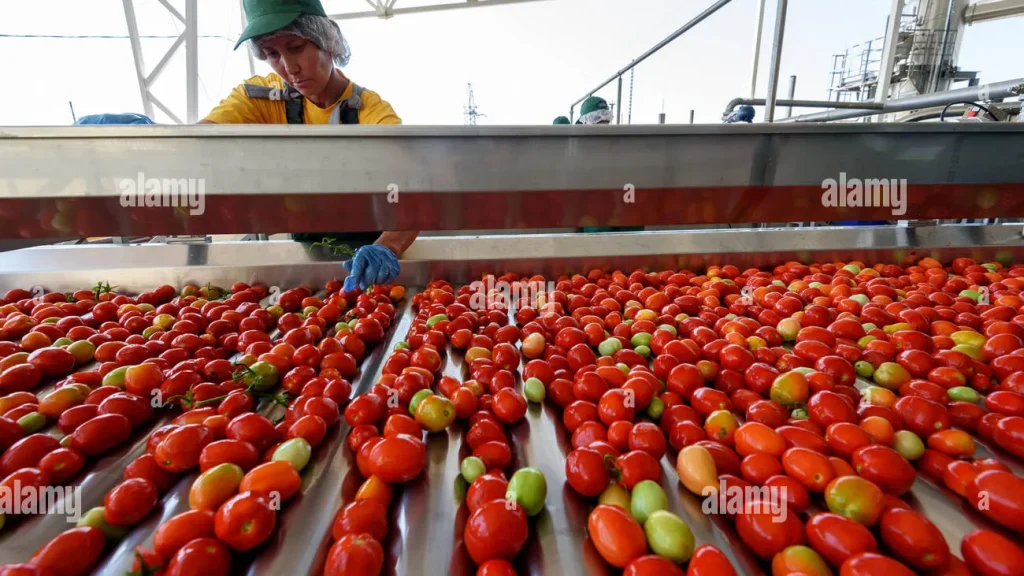
After selection, the tomatoes are thoroughly washed to remove dust, soil, and any impurities.
They are then sorted, and any damaged or unsuitable tomatoes are removed from the production line. This important step helps ensure consistent product quality throughout the manufacturing process.
3. Crushing and Juice Extraction
The selected tomatoes are crushed, and their juice and pulp are separated from the skins and seeds.
Modern processing equipment performs this step efficiently while preserving the tomatoes’ natural color, flavor, and valuable nutrients.
4. Concentration and Tomato Paste Production
The extracted tomato juice is transferred to concentration equipment, where excess water is removed under carefully controlled conditions.
This process creates a thick, concentrated tomato paste with a rich flavor, natural color, and the ideal consistency. Precise control of temperature and processing time is essential for maintaining product quality and preserving the tomatoes’ natural characteristics.
5. Quality Control
Quality control is performed throughout every stage of production.
Specialists continuously evaluate important characteristics, including:
- Color
- Consistency
- Acidity
- Flavor
- Microbiological safety
- Compliance with food safety standards
Continuous monitoring ensures that every batch meets strict quality and safety requirements before moving to packaging.
6. Hygienic Packaging
Once the product passes all quality inspections, the tomato paste is filled into food-grade containers such as metal cans or glass jars.
Proper packaging protects the product from air, light, moisture, and contamination, helping preserve freshness, quality, and shelf life.
7. Storage and Distribution
After packaging, the finished products are stored under appropriate conditions before being distributed to retailers and customers.
Proper storage and transportation help maintain the product’s quality from the factory to the consumer’s table.
Why Does the Production Process Matter?
The quality of tomato paste depends on far more than the tomatoes themselves. Advanced manufacturing technology, modern equipment, hygienic production practices, and rigorous quality control all contribute to producing a safe, flavorful, and consistently high-quality product.
Choosing tomato paste from a trusted manufacturer that follows recognized food safety and quality standards provides consumers with greater confidence in both the product’s quality and reliability.
Conclusion
The journey of tomato paste begins on the farm and continues through careful selection, washing, processing, concentration, quality control, and hygienic packaging.
Every stage plays an essential role in creating tomato paste with a natural color, rich flavor, ideal consistency, and dependable quality. Attention to detail throughout the production process is what distinguishes premium tomato paste from ordinary products.